The parish (or ‘parochial’) council’s primary responsibilities came under the headings of Poor Law, Registration (births, deaths and marriages), Cemeteries and Education.
Prior to 1845, implementation of Scottish law for the alleviation of poverty (‘poor law’) was the responsibility of kirk sessions (local church governing bodies) and heritors (landowners with designated local obligations). From 1845, this was transferred to parish councils, each with an ‘inspector of the poor’ to assess applications.
At the end of 1914, the numbers on Langholm parish council’s poor roll were:
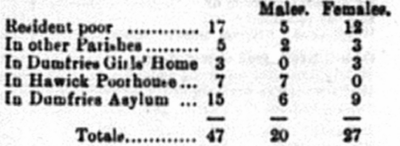
Like many other parishes, Langholm had a poorhouse for the more extreme cases, providing accommodation and/or medical care by a parish-appointed doctor. If the appropriate local facilities were not available, residents could be assigned elsewhere, usually at the originating parish’s expense.
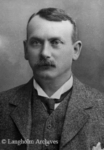
Langholm’s inspector of the poor was James Morrison (1866-1930), who was also the parish’s registrar and clerk to the parish council.
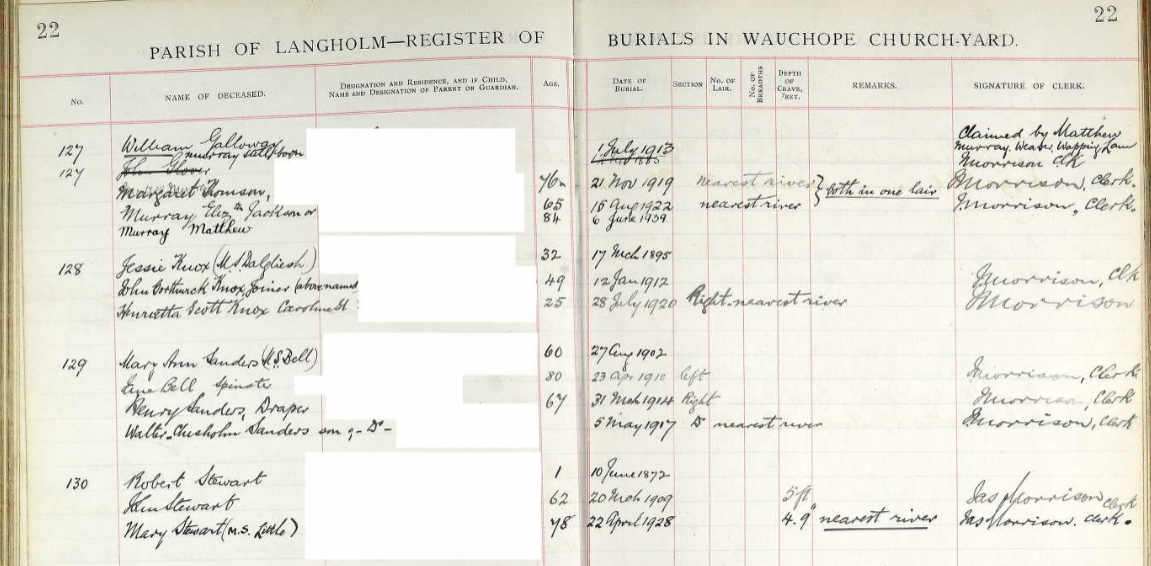
As well as births, deaths and marriages, he also registered burials in the parish’s three cemeteries: Langholm (new), Wauchope and Staplegordon.
The cost of schooling at Langholm’s infant school and academy was largely met by the parish council (see Education).
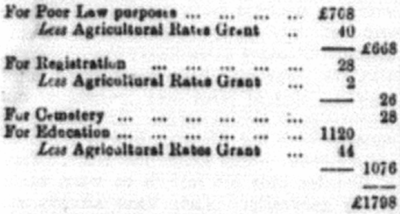
Estimates of the council’s expenses for the year ending 15th May 1916 were as shown below, totalling £1,798 after the Agricultural Rates Grant, which was a payment from central government.
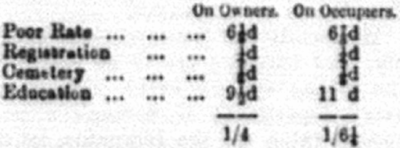
These expenses were covered by parish ratepayers based on the valuation of their properties. Valuations were made each year and were applicable for the twelve months to 15th May, the legal date for Whitsunday in Scotland. Valuations were multiplied by rates set by the parish council each year, which for 1915-1916 were as shown below. This was in addition to the rates set by the town council.
Outside normal business, the main issue that the parish council had to deal with in 1915 was the resignation of the cemetery keeper without serving his one month’s notice, after refusing a pay rise (see 6th December in the Diary).
The parish council was led by chairman Charles Paisley, skinner (tanner) and justice of the peace. Other members (some of whose attendance was somewhat sporadic) were:
- Andrew Aitchison, farmer, Old Irvine.
- Arthur Bell, owner of Buccleuch mill.
- James Cairns, Ford mill co-owner.
- Thomas Easton, provost (mayor) and grain merchant.
- Thomas Gaskell, farmer, Murtholm, and slate merchant.
- John Goodfellow, painter.
- John Milne Home, the Duke of Buccleuch’s chamberlain (household manager) and factor (land agent).
- William Milroy, ironmonger.
- Walter Wilson, stationer and publisher.