Scotland is the home of ‘modern’ golf, dating back to the 1400s. It was banned by James II of Scotland in 1457 to promote archery but was allowed from 1502 when James IV took up the game.
The world’s oldest course is the Old Course of the Royal and Ancient Golf Club of St Andrews (the ‘R&A’), with play recorded from 1552 but occurring beforehand. Rules could vary significantly between clubs, with the oldest on record being from 1744. The R&A standardised the game’s rules in 1897.
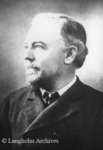
Langholm Golf Club was founded in 1892 on the initiative of Alexander Scott (1843-1903), co-owner of Waverley mill.
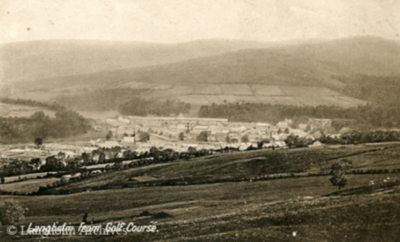
A 9-hole course was laid out on a hill overlooking Langholm on land belonging to George Maxwell of Broomholm, later owned by Arthur Bell. It was initially very rough, with the grass being cut with a scythe, and cow pats being widely present. A horse-drawn mower was purchased in 1910.
Par for 18 holes was 100, the maximum handicap was 50 and the course record in 1893 was 93.
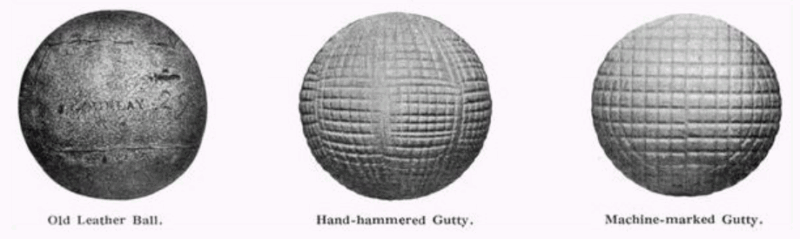
By 1915, the main ball used nationally was the rubber-cored ball, replacing the earlier ‘guttie‘, made of solid gutta-percha (latex), which in turn had replaced the ‘featherie‘, consisting of boiled feathers stuffed and sewn into a leather pouch. Clubs had hickory shafts and a wooden or metal head.
Lady members could join from the outset and ‘artisans’ from 1894, with the latter being a separate membership category until 1920.
Golf balls were expensive, particularly on artisan wages, and it became common for players to burn grass, gorse and heather to find lost balls. This led to a bye-law providing for expulsion from the club for burning.
Another regulation against damage was introduced later, banning the use of ladies’ high heels on putting surfaces, with any miscreants being liable to expulsion and being named on a public notice board in town.
In 1908, the well-known Ben Sayers (senior) was paid to redesign the course, which he did, but his design was rejected. Sayers has been described as one of the best golfers never to win the Open Championship (the ‘British Open’), coming second in 1888.
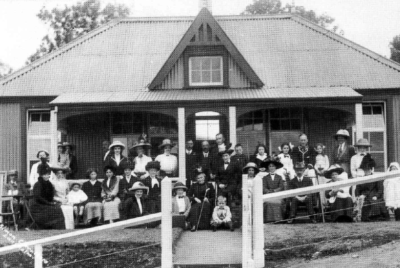
A new clubhouse was built in 1912 to accomodate the growth in the number of members to 130.
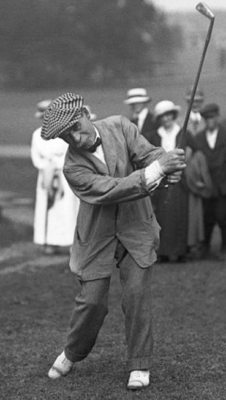
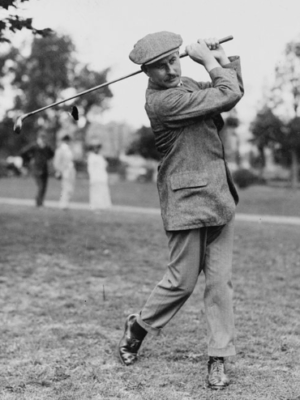
The Open Championship in 1914 was won by Harry Vardon, for the sixth time in his record total of seven. The Scottish Open did not begin until 1972.
Around 40 members of the club served in the war, with six being killed and three being decorated for bravery. The club played some local competitions but not inter-club matches, and did not hold club champion competitions.
Langholm club officials in 1915 and prizewinners in 1914-1915 included:
- Patron: Rev David Maxwell, Broomholm,
- President: James Scott, Erkinholm, son of the club’s founder.
- Captain: Robert Hamilton, rector of Langholm Academy.
- Secretary: William Milroy, ironmonger.
- Handicapper: John Cameron, bank agent.
- Club champion (1914): S Hyslop (probably Simon Hyslop, teacher, son of Matthew, painter).
- Rose Bowl winner: Rev David Inglis.
- Handicap medal: H Simson, house steward to the Duke of Buccleuch, who had a hole in one in September 1915.
A booklet for the club’s centenary (1892-1992) can be found here.