‘Miniature’ rifles have a small bore, typically .177 or .22 inches (4.5 or 5.6 mm), firing cartridges or pellets. A popular make was BSA by the Birmingham Small Arms Company. Some indoor recreational models were known as ‘gallery guns‘.
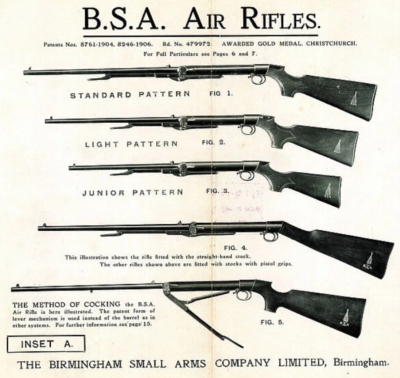
Rifles with larger bores could be modified by fitting the barrels with Morris Tube inserts to enable indoor use.
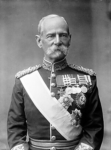
Miniature rifle shooting was popularised by Field Marshal Lord Frederick Roberts after the Second Boer War to improve the general standard of marksmanship in the UK. Britain had suffered several defeats during the war, due in part to the Afrikaners’ better shooting.
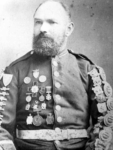
Langholm had a long history of military marksmanship through the Eskdale Rifle Corps and the Langholm Volunteers/Territorials, both of which organised shooting competitions. Robert McVittie, known as ‘Bob the Shot’, was one of the world’s best marksmen in the 1870s. Albert Place in Langholm was named after the Albert competition, one of the many prestigious events won by McVittie.
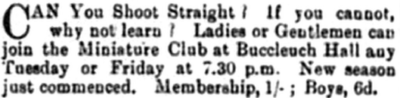
The Langholm Territorial Miniature Rifle Club held indoor practices and competitions in the Buccleuch Hall and the Eskdale Temperance Hotel. There was an outdoor range at Arkinholm, just to the north of the town.
The club encouraged townsfolk to join any of their twice-weekly practices:
It held three club matches in 1915, two against Carlisle Ladies (draw) and one against Silloth at Carlisle (lost).
It also held internal competitions, including the following in March 1915 with a format of 5 shots per person at 25 yards (maximum individual score of 5 x 10 = 50):
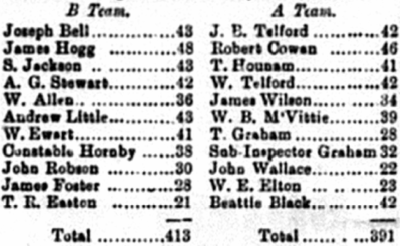
The president of the club was Major Edward Bell, director of Buccleuch mill, and the secretary was William McVittie, grocer’s assistant (later provost, 1948-1952; not closely related to Robert McVittie).
< Hunting and shooting … Rugby >