6th-29th August 1915
The August Offensive was an attempt to break the deadlock on the Gallipoli peninsula. It included:
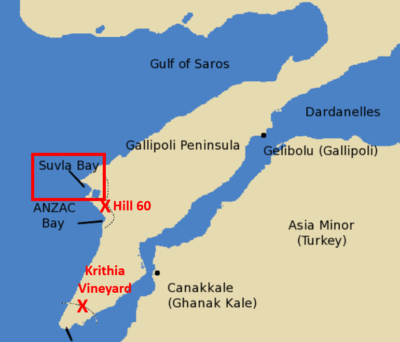
6th-13th August 1915
5th KOSB spent the second half of July in a rest camp, with an occasional swim in the sea. However, there were still many duties to do in camp and they were subjected to periodic shelling and aircraft bombing. After a camp concert on 4th August, the battalion returned to the trenches on 6th August.
It was the fourth attempt to take the village of Krithia after prior battles in April, May and June. It too failed, although a small amount of extra ground was gained.
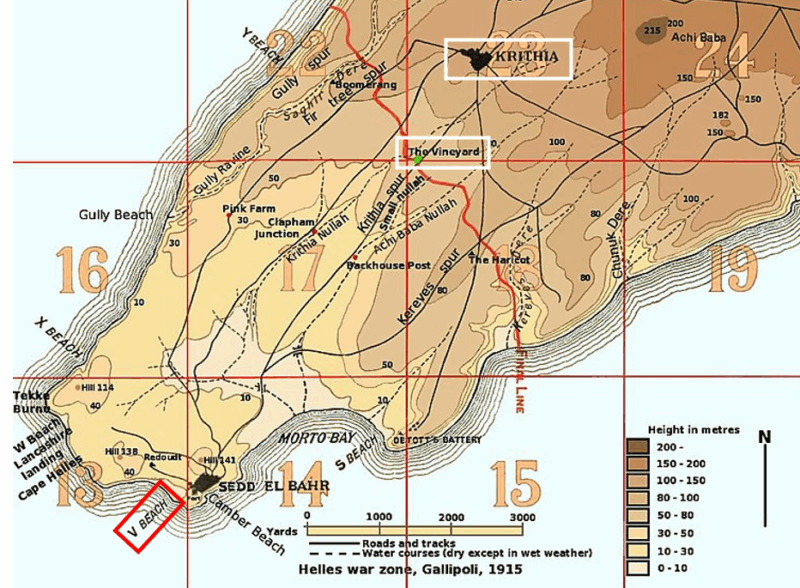
This was followed by a couple of weeks of sniper fire and night patrols, interspersed by sporadic charges by the Turks, which were repelled. Some of the patrols were led by Lieutenant James McGeorge, son of Langholm solicitor Robert McGeorge, advancing to forward trenches and into no man’s land.
6th-15th August 1915
The order of battle included:
- IX Corps
- 10th (Irish) Division
- 30th Brigade
- 7th Battalion, Munster Fusiliers (William Scott killed in follow-up action: see Battle of Hill 60 below)
- 30th Brigade
- 11th (Northern) Divison
- 33rd Brigade
- 6th (Service) Battalion, Border Regiment (David Wallace killed)
- 33rd Brigade
- 10th (Irish) Division
On 6th August, 6th Border Regiment were transported on destroyers from near the south of the Gallipoli peninsula to Suvla Bay, north of Anzac Cove. On the following day, 7th Munster Fusiliers landed from Mudros, Greece, a fresh force on the Gallipoli peninsula.
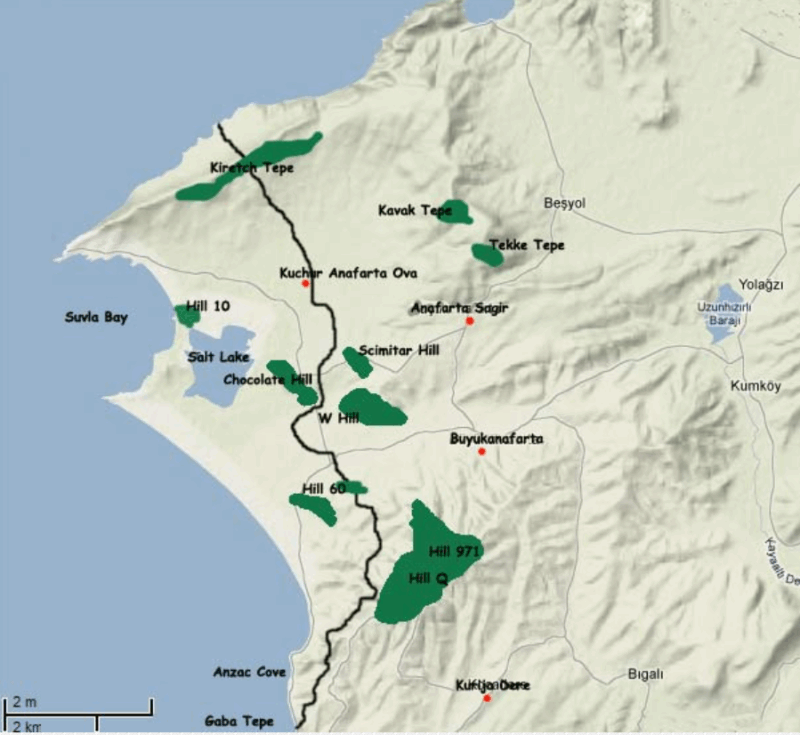
These and other troop landings at Suvla Bay were intended to assist a breakout from Anzac Cove and take the high ground to the east. Despite some initial successes, the situation was soon reduced to a stalemate, often blamed largely on the command of Lieutenant-General Frederick Stopford.
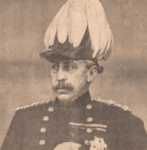
Stopford was replaced as General Officer Commanding IX Corps by Lieutenant-General Julian Byng on 15th August 1915, later Governor General of Canada and head of London’s Metropolitan Police.
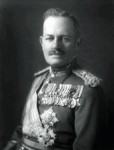
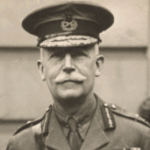
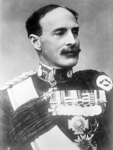
Byng had been considered earlier to head the Suvla landing, as had Lieutenant-General Sir Spencer Ewart of Craigcleugh, near Langholm. However, Byng was outranked by Stopford and Ewart was viewed by Sir Ian Hamilton, commander of the Mediterranean Expeditionary Force, as being too bulky to inspect trenches and without recent command experience.
Died
| Date | Surname | Forenames | Event | Unit | Rank/No. | Age | Address | Memorial |
|---|---|---|---|---|---|---|---|---|
| 9th August | Wallace | David | Killed in action | 6th Border Regiment | Sergeant 5399 | 45 | Fletchertown, Cumberland | Helles, Türkiye |
David Wallace served with the KOSB in the Chitral Expedition in 1895 and in the Second Boer War in South Africa, rejoining the army in the 6th Border Regiment. His stepfather was William Douglas, owner of the Eskdale Temperance Hotel, where David worked as a groom and coachman in the late 1890s. The first of his six children was born in Langholm before he moved to be near his wife’s family in Cumberland.
21st-29th August 1915
After the landing at Suvla Bay, the main encounter was the Battle of Sari Bair (6th-21st August). This took place in a range of hills between Suvla Bay and Anzac Cove, particularly on Hill 971 (part of the lowest green area in the map of the Landing at Suvla Bay above). A key opponent was Mustafa Kemal, later President Atatürk, leader of the Turkish nation from 1923 to 1938.
A follow-up conflict was nearby at Hill 60 (not to be confused with Hill 60, Ypres). This may have been where William Scott was killed, although some 7th Royal Munster Fusilier troops were also still defending Suvla Bay.
Died
| Date | Surname | Forenames | Event | Unit | Rank/No. | Age | Address | Memorial |
|---|---|---|---|---|---|---|---|---|
| 26th August | Scott | William | Killed in action | 7th Royal Munster Fusiliers | Private 2155 | 29 | Pontefract, Yorkshire | Helles, Türkiye |
William Scott‘s parents were born in Langholm and moved to Pontefract, Yorkshire, where his father was a skin puller (removing the wool from sheepskins). William was a skin washer in the fellmongery (skin trading) business. His aunt Elizabeth Scott lived at 20 Caroline Street, Langholm. His younger brother David was awarded the Military Medal in 1916 for attending the wounded under fire.