1. National insurance
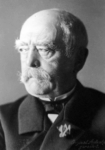
The National Insurance Act 1911 introduced a scheme for the provision of sick pay and healthcare by means of contributions from the government, employers and workers. It was championed by the Liberal Chancellor of the Exchequer David Lloyd George with the assistance of Home Secretary Winston Churchill, and was significantly influenced by a system initiated in 1884 in Germany by Otto van Bismarck.
It was only for wage earners and was administered through post offices and approved organisations. Sick pay with stipulated maximums could be received for up to 26 weeks and healthcare could be provided by approved doctors.
The Act included a similar scheme for unemployment in highly cyclical industries such as shipbuilding, foundries and sawmills, but woollen mills were not covered by this.
2. Friendly societies
‘Friendly societies‘ in the UK date back to the 1600s, with trade guilds providing benefits to paying members. They expanded considerably in Victorian times, with income from members being paid out mainly in the forms of sick pay, funeral expenses and annuities.
From 1911, friendly societies’ own schemes could be combined with the new system if they became approved organisations under the National Insurance Act.
Examples of local friendly societies included the Langholm Working Men’s Sick Society and the Langholm Woollen Mills’ Women’s Sick Society.
3. Doctors
Langholm’s physicians had various types of casework:
- Private practice cases.
- National insurance and friendly society cases (see above).
- Hospital cases (see below).
- Medical examinations of military recruits.
In 1913, the town had two doctors, before the much-respected John Gill died in April 1914:
| Name | Age in 1915 | Born | Qualified | As a doctor in Langholm |
|---|---|---|---|---|
| John Gill (1855-1914) | Deceased | Leadhills, Lanarkshire | Edinburgh, 1877 | 34 years: 1880-1914 |
| Robert Watt (1875-1950) | 50 | Lossiemouth, Elginshire | Edinburgh, 1904 | 41 years: 1909-1950 |
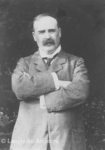
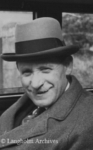
For national insurance cases, patients could choose their doctor at the end of each calendar year. However, with only one doctor left in town, Dr Gill’s 600 patients were notified that they were being transferred to Dr Watt. The lack of choice resulted in a large meeting in May 1914, demanding a second doctor. After a search, Dr Andrew Calwell from Mainsriddle, south of Dumfries, was appointed, taking over Dr Gill’s former private practice in late 1914.
Meanwhile 22-year old Dr Frederick Gibbs from Edinburgh moved to Langholm as an assistant to Dr Watt.
| Name | Age in 1915 | Born | Qualified | As a doctor in Langholm |
|---|---|---|---|---|
| Frederick Gibbs (1892-1960) | 23 | Edinburgh | Edinburgh and Glasgow, 1913 | 2 years: 1914-1916 |
| Andrew Calwell (1884-1954) | 31 | Wellington, Shropshire | Edinburgh and Dublin, 1912 | 25 years: 1914-1939 |
Dr Calwell had a challenging introduction to Langholm, being called to attend the Quintishill railway disaster (see 22nd May 1915 in the the Diary) and possibly witnessing the death of his landlady Eleanor Bell who deliberately drank carbolic acid (see 9th July 1915 in the Diary).
All three of the post-1914 doctors were called up to join the Royal Army Medical Corps during the war:
- Dr Frederick Gibbs, the youngest, served in France and Italy, and was reported by the E&L as being wounded in 1916. After the war he returned to Edinburgh and specialised in dentistry.
- Dr Andrew Calwell was obliged to join up after a failed petition by 507 of his patients in 1917. He was awarded the Military Cross for attending the wounded under heavy shell fire on 4th November 1918 in the Battle of the Sambre. He was also awarded the Langholm Burgh Medal in 1919.
- Dr Robert Watt was called up in 1918 but was still in Glasgow when the war ended.
4. Medication
For national insurance and friendly society cases, the cost of medication was covered by the schemes; otherwise it needed to be paid for by the patient.
Medicines and their promotion were lightly regulated, and the local newspaper contained regular adverts for ‘cure-alls’ and ‘patent’* treatments: see Katherine Ritchie (High Street chemist).
* Usually this referred to a trademarked brand with secret ingredients, rather than a legal patent.
5. Hospitals
There were three local hospitals, the county’s main hospital in Dumfries and a Dumfries ‘asylum’.
Thomas Hope Hospital
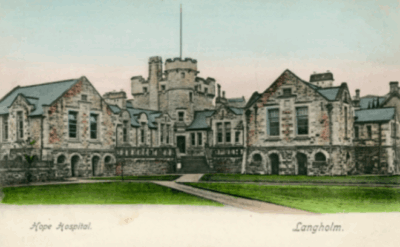
The Thomas Hope Hospital was opened in 1898. Located in the town centre, it was a ‘cottage’ (small, rural) hospital endowed by a Langholm emigre who made a fortune in a grocery business in the USA. It was owned by a trust and managed by trustees. The main on-site official was Matron Miss Mary Robertson.
Approved local doctors could refer patients (within the trust’s criteria) and visit them for treatment. The hospital was intended for poor patients only and admissions were strictly controlled, sometimes involving heated arguments between the hospital and doctors.
Dr Gill was admitted himself after a stroke while visiting hospital patients on Saturday 4th April 1914; he died there on Tuesday 8th April.
Eskdale Infectious Diseases Hospital
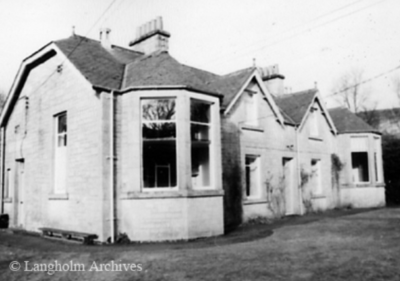
Sited on a hill just to the south of the town, the Eskdale Infectious Diseases Hospital provided a quarantine area for the containment and treatment of influenza, tuberculosis and other infectious diseases.
It was managed jointly by the Langholm District Committee of the Dumfriesshire County Council and the Langholm Parish Council, and was run day-to-day by Matron Jane Hogg.
Red Cross Hospital
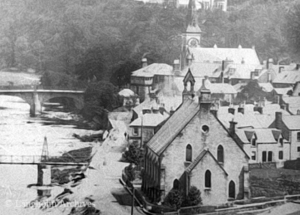
The hospital was established in October 1914 in the Mission Hall of Langholm’s Parish Church, near the town centre. It was under the direction of Lady Ewart, wife of Sir Spencer Ewart, head of Scottish Command. The Ewarts lived just outside Langholm.
Dumfries Royal Infirmary
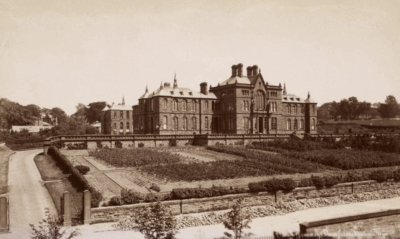
Dumfriesshire’s main hospital was the Dumfries Royal Infirmary, designed by John Starforth and completed in 1871. It became part of the National Health Service in 1948 and continued as a hospital until 1975, when it was converted into NHS administrative offices upon the launch of a new hospital. It was sold by the NHS in 2017 and its future use is under review.
Dumfries Asylum
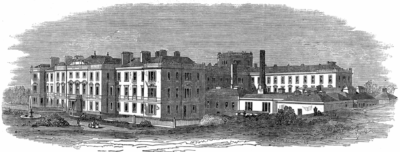
Inpatient mental health cases were handled by the Dumfries Asylum, constructed mainly with an endowment by James Crichton, an East India Company merchant and former physician to the Governor General of India. It was opened in 1839 as the Crichton Institution for Lunatics and was renamed the Crichton Royal Hospital in 1840. It was referred to as the Dumfries Asylum in the E&L in 1915.
Various additions were made over time. It is now a university campus, hotel, conference centre and park, known as The Crichton.
The 1911 Scottish census categories for mental infirmities were ‘lunatic‘, ‘imbecile‘ and ‘feeble-minded‘. The Registrar-General’s report (Volume 3) for the 1911 census states that the terms are not easily defined, but that ‘lunatic’ describes a condition acquired during life whereas the other two conditions are congenital, ‘imbecile’ being more serious than ‘feeble-minded’.
These and other infirmity terms (‘blind’ and ‘deaf and dumb’) were not used in Scottish censuses after 1911, mainly due to lack of clarity about their meanings. The terms ‘lunatic’ and ‘asylum’ were replaced with ‘patient’ and ‘mental hospital’ by the Mental Treatment Act 1930.
6. Dentist
From mid-1915, the town had a resident dentist, Edmund Priestley, replacing visiting dentists and a former local practice run by the Ritchie family, chemists in the High Street.
Edmund’s practice was initially based at the north end of town (‘Townhead’), and he also made visits to nearby Longtown and Newcastleton. From May 1917 he ran his practice from a room in the Eskdale Temperance Hotel.
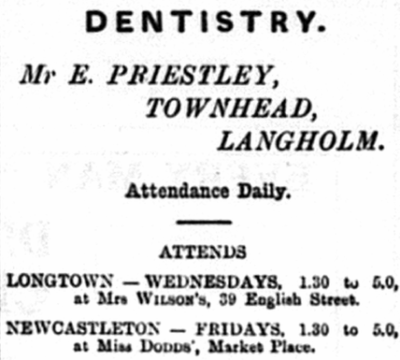
He was called up in early 1918, at age 33, but his appeal against this to the Longtown military tribunal was successful on the basis that he was the only dentist in the Longtown and Langholm area, with a population of around 7,000. In addition to his private practice, he provided dentistry services to local hospitals and military personnel, and stated that he had ‘never charged a chap in khaki a halfpenny and never would’.
Edmund was from Burnley, Lancashire, and was married to Jane Bell, originally from Birkenhead, Cheshire. By 1921, they had relocated to Carlisle, after which they moved to Birmingham.
< Fire service … Law and order >