Dumfriesshire is the home of the savings bank, with the world’s first of its kind being founded by Rev Henry Duncan (1774-1846) in Ruthwell in 1810. It was what became known as a ‘mutual’ or ‘friendly’ society, owned by contributing members who benefitted from the net proceeds of a shared enterprise. Duncan’s main intention was to encourage low-income parishioners to save for times of hardship and for old age.
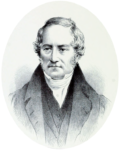
He was from Kirkcudbrightshire and was a Church of Scotland minister, becoming the moderator of its General Assembly in 1839. Shortly afterwards he was a founding member of the Free Church of Scotland in the Disruption of 1843 (see Churches for an overview of Scottish denominations). He was a person of many interests, including being a newspaper editor, military captain and author of geological, antiquarian and fictional works.
Henry Duncan’s institution and ethos became a model for many others worldwide. The National Bank of Scotland (founded in Edinburgh in 1825) established the Langholm Savings Bank in 1849. Five years later, the Langholm Penny Savings Bank was founded, a smaller enterprise that opened on Monday evenings, run by Rev William Watson of the South United Free Church.
The Penny Savings Bank was taken over by the Langholm Savings Bank in 1889. The latter was wound up after a bad investment in around 1910, but the trustees reimbursed the deficit.
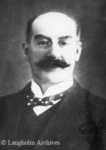
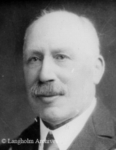
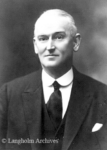
A new government-backed Langholm and District Savings Bank was launched in March 1914, supervised by a committee incorporating Provost Thomas Easton, Bailie John Cairns and woollen manufacturer Arthur Scott. The administrator was John Cameron, actuary and bank agent for the National Bank of Scotland.
Its opening hours were every day at the National Bank of Scotland and 6 p.m. to 7 p.m. on Monday evenings in the hall of the Chalmers United Free Church.
The Langholm School Board had a School Savings Bank, which had 250 depositors with a fund of £130 at the end of 1913.