The Romans called distilled alcohol aqua vitae (‘water of life’). The equivalent in Gaelic is uisge beatha, with the English word ‘whisky’ coming from uisge (‘water’).
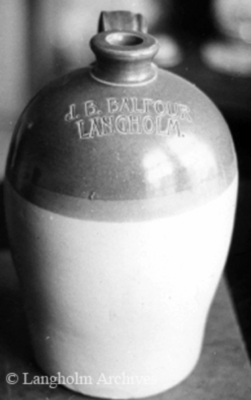
The spelling is ‘whisky’ rather than ‘whiskey’ for products made outside Ireland and the USA (although there are some exceptions in the USA).
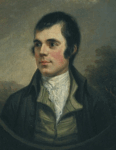
Whisky was taxed by means of a production licence and payment for each gallon of spirit. Perhaps the world’s best known taxman, although known for his poetry rather than his excise role, was Robert Burns. There is a possibility that he visited Langholm on his Dumfriesshire travels but there is no record of this.
The production process involves malting, mashing, fermentation, distillation and maturation (see below). The latter was discretionary until enforced by the Immature Spirits (Restriction) Act of 1915, introduced by David Lloyd George, requiring two years of being ‘warehoused’, extended to three years in 1916.
This put severe pressure on many distilleries, which were already struggling from curtailed supplies, restrictions on alcohol consumption and a depleted workforce (see Topics > Alcohol). The number of whisky distilleries in Scotland dropped from 133 in 1914 to only eight in 1918, although the number recovered quickly after the war.
Malting
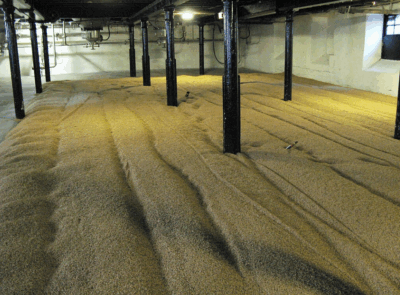
The barley is soaked and laid out to germinate for a few days. It is turned regularly then dried in a kiln and ground to form ‘grist’.
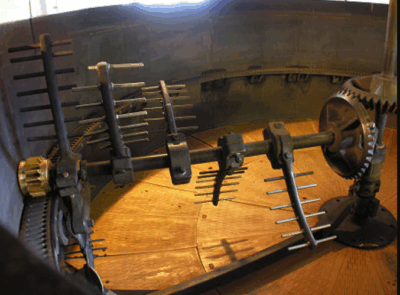
Mashing
The grist is placed in hot water in a mash tun and stirred. The spent grist (‘draff’) is separated from the liquid (‘wort’) and the former is sold for cattle feed.
Fermentation
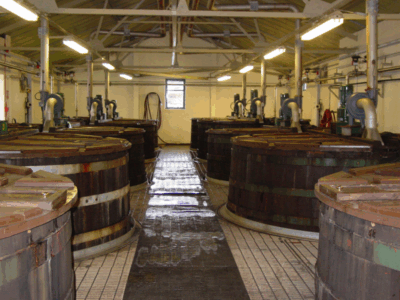
Yeast is added to the wort in ‘washbacks’ which converts sugars into alcohol. The resultant ‘wash’ is around 6-8% alcohol.
Distillation
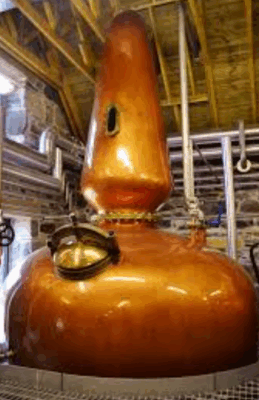
The wash is heated in stills and the evaporated alcohol is condensed, producing a liquid of 40%-60% alcohol. This can later be diluted with water to the desired level.
Maturation
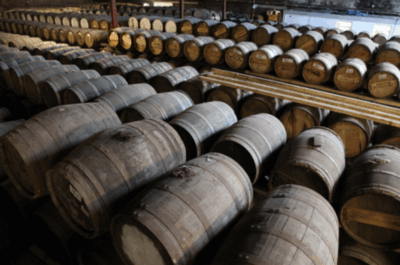
The whisky is stored in oak casks which provide flavour and colour. Around 2% per year evaporates from the cask: the ‘Angel’s Share’.