The main steps in a typical tannery’s process are preparation, curing, liming, splitting, tanning and finishing (see below). Skins come mostly from cattle, with the remainder in the UK from sheep, goats and pigs.
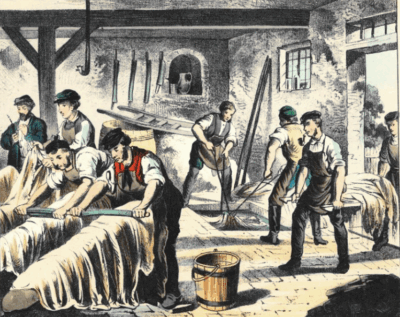
Preparation
Most of the hair, fat, etc. is removed from the animal skins which are then washed and soaked.
Curing
Curing is done with salt in either a dry or wet process to prevent bacteria growth.
Liming
The skins are treated with slaked lime (calcium hydroxide) to remove any remaining non-skin residue.
Splitting
The soft underside of the skin is separated to make suede and the outer ‘grain’ is used to make harder leather. The term ‘suede’ comes from the French gants de Suède (‘gloves of Sweden’): soft Swedish leather was popular in France in the 1700s.
Tanning
By the time of the war, chemical tanning had replaced vegetable tanning as the primary method of producing leather.
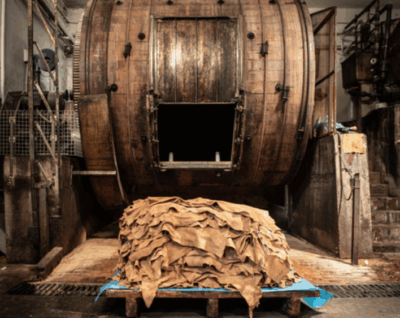
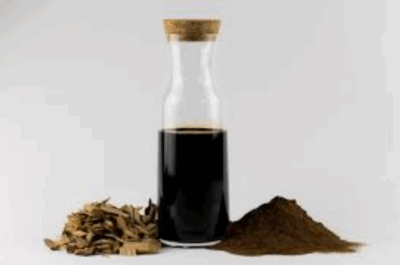
Vegetable tanning uses mainly tree bark, particularly oak, to treat skins in a rotating drum containing tannin-infused water (hence ‘tanning’). The tannin molecules in the bark make leather more water-resistant, anti-bacterial and flexible. Tan was an old French word for crushed oak bark.
Chrome tanning was invented in 1858 and uses chromium sulphate to achieve the same results as vegetable tanning but much faster: typically in one day. Vegetable tanning takes a number of days or even weeks.
Finishing
The tanned leather is dried and can be treated with oils or wax. It can also be stretched, dyed, buffed and finished in other ways, depending on the product required.