70 High Street
Trading as J B Balfour
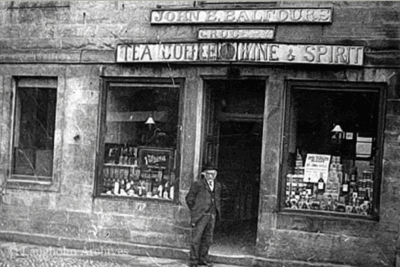
Walter Glendinning (1885-1956) took over the grocery business of his uncle John Balfour (1843-1911) and continued the J B Balfour trading name. Walter’s father John was a photographer.
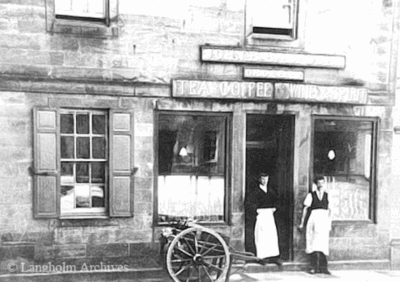
As well as selling fresh and preserved foods, grocers could apply for a licence to sell alcohol for consumption off the premises (an ‘off licence’). J B Balfour’s signage advertised TEA COFFEE / WINE & SPIRIT.
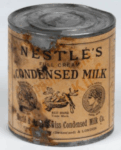
In addition to fresh produce, grocers also sold canned food which was becoming more widespread as fresh supplies diminish. Canned food was available from the early 1800s and was mass-produced from the late 1800s. It became a major source of army rations on the front line. Notable UK brands included Batchelors (especially for vegetables) and Crosse & Blackwell. Internationally, Nestlé was particularly known for its condensed milk.
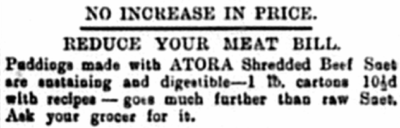
Atora, made by Hugon & Co. in Manchester, promoted its shredded beef suet (85 percent kidney fat and 15 percent wheat flour) via grocers as a cost saver compared to raw suet (unprocessed kidney fat with impurities).
J B Balfour advertised weekly in the local paper, promoting ‘tonic quinine wine’. Quinine (from cinchona bark) was added to regular wine and the adverts claimed that the resultant drink generates energy and wellbeing.
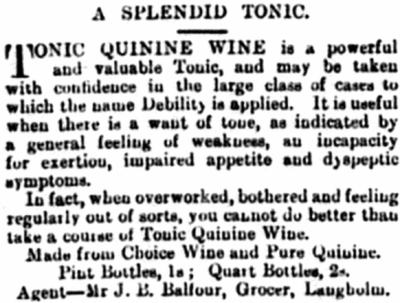
Quinine was used as an anti-malarial in the tropics, but its addition to wine for UK sales was to create a sharper taste and tap into the demand for patent medicines.
Walter’s grandfather Archibald Glendinning (1811-1888) started the ironmonger’s almost opposite J B Balfour in Market Place, which became a chemist’s run by Katherine Ritchie.
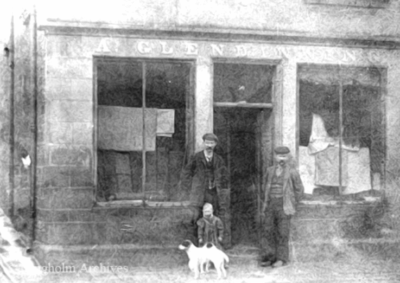
Walter married Mary (‘Molly’) Davidson, originally from Newcastle upon Tyne, in Edinburgh in June 1915. They had a son, Campbell, in 1916. Mary died in 1918, aged 27, in Claygate, Canonbie. Campbell continued the J B Balfour shop for many years after his father’s death.
< Grain merchant … Hairdresser >