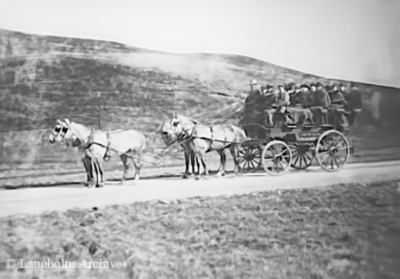
The Langholm Post Office was part of a huge General Post Office network with around 250,000 staff in 1914, said to have been the largest single civilian employer in the world at the time.
It was overseen by Postmaster General Herbert Samuel, a Liberal cabinet minister in the government.

In 1915, the regional structure was:
- England
- 10 regions.
- Scotland
- Western: run from Glasgow; included Langholm.
- Eastern: run from Edinburgh.
- (It was previously divided in Northern, Midland and Southern regions.)
- Ireland
- North and South: both run from Dublin.
The volume of post and telegrams increased considerably during the war and prices were increased in the 1915 Autumn budget to raise revenues. Postage stamps were still a penny for the cheapest rate (known as ‘penny post’, in place since 1840) but the sliding scale for some heavier weights was made more expensive.
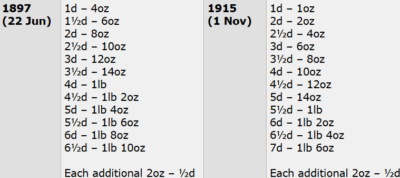
Inland telegrams were six pence for the first 12 words including the address, plus a half pence for each additional word. The initial rate was increased by 50 percent to nine pence for the first 12 words.
‘Penny post’ ended in 1918 after 78 years when the cheapest rate was raised to a penny and a half because of war debt and inflation.
Post and telegrams were subject to being vetted by around 680 censors in the UK, and many others overseas: see 5th May 1915 in the Diary.
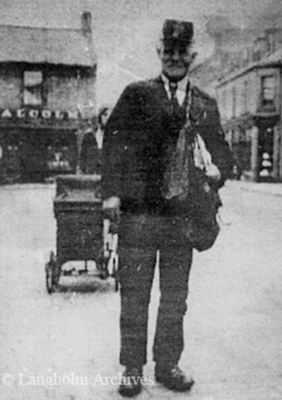
Six standard uniforms for different functions were introduced in 1910, replacing a somewhat haphazard earlier system. Women’s uniforms were introduced during the war. Below is a Langholm postman, Robert Beattie (1880-1960), in his uniform in around 1926.
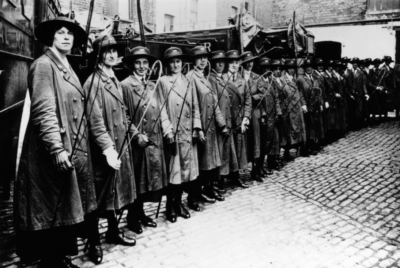
Many male post office staff enlisted in the military and were largely replaced by women to handle surging wartime demand for international and domestic postal services, including post and parcel deliveries, telegraph messages, money orders and savings bank transactions.
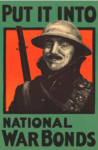
In addition to postal services, the post office also handled transactions for various government programmes, such as national insurance and the sale of stock for war bonds (also called ‘war loans’ or ‘Victory Bonds’).
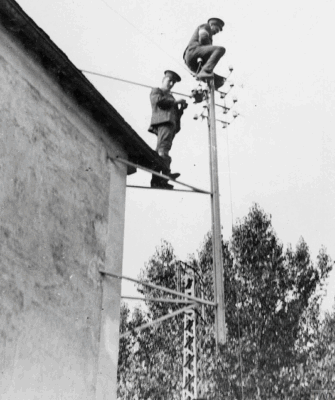
The Royal Engineers (Postal Service), also known as the Army Postal Service, was formed to handle mail and telegrams for the military, staffed mainly by former General Post Office employees.
The current postcode system was first trialled in 1959 but not fully implemented across the UK until 1974.
As distinct from a postmaster, a posting-master provided transport services between stagecoach posts, which were intermediate stops on longer journeys. The services had often incorporated the transport of mail, but the term posting-master was almost out of date by 1915 with the growth of railways and motorised vehicles. Nevertheless, it was used in the 1915 valuation roll to describe Robert Douglas (1858-1942), brother of William Douglas, innkeeper of the Eskdale Temperance Hotel. Together they ran the successful Eskdale and Liddesdale Coaching Tours from the hotel.