Market Place
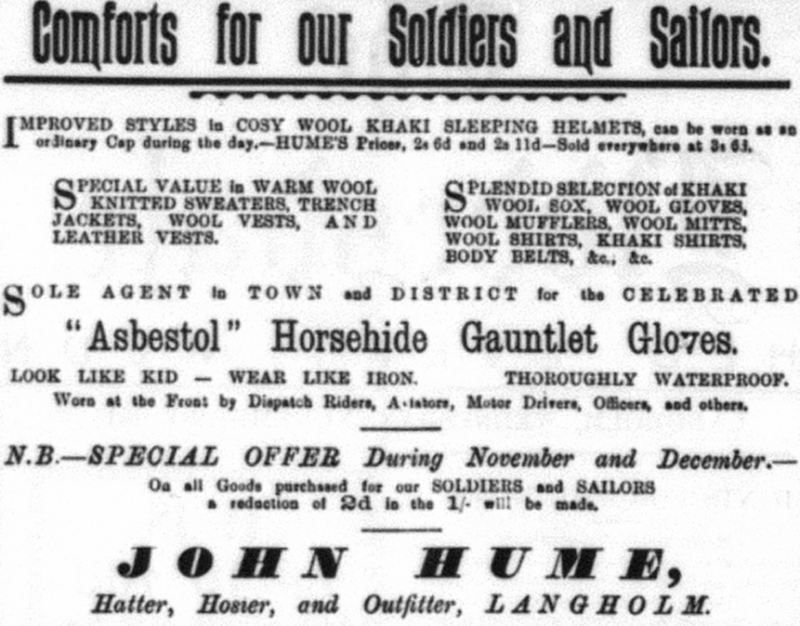
John Hume (1859-?) opened a new hat, hosiery and outfitting establishment in Langholm in July 1915, announced with a large advert in the E&L:
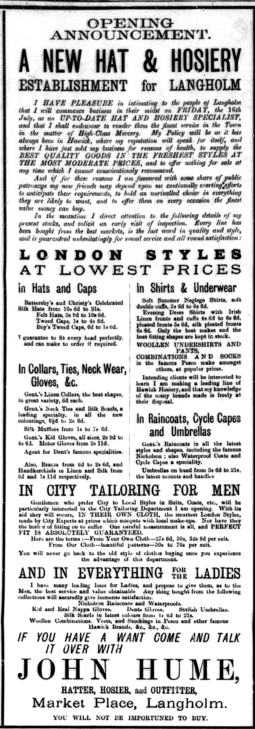
He was a shrewd promoter, taking advantage of the lack of a specialised men’s hatter or hosier in Langholm to sell a wide range of other clothing as well. Women’s and children’s hats were typically sold by a ‘milliner’ rather than a ‘hatter’, such as Bella Pringle. ‘Hosiery’ could be knitted products of any type, not just products for the legs and feet.
John described his service as ‘High-Class Mercery’, a mercer being a trader of textile goods, from the French mercerie meaning ‘haberdashery’. The term is unrelated to mercury, which was used by hatters in the form of mercuric nitrate to stiffen felt. The chemical was discontinued in hatmaking since around 1900 in Europe as it can cause a neurological disorder known as erithism or ‘mad hatter syndrome’; hence the phrase ‘mad as a hatter’.
Hat styles in fashion for men in the UK included the flat cap, fedora, boater and bowler.
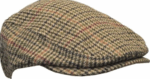
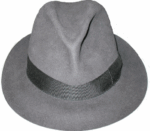
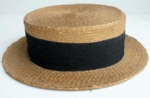
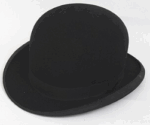
Flat caps made from tweed were very popular in Langholm. Fedoras are made from straw or felt from compressed wool and/or fur fibres. Boaters are made from straw and bowlers from felt with a silk inner lining.
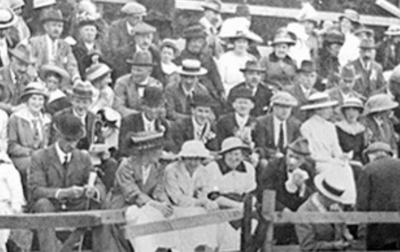
The bowler’s original design was by London hatmakers Thomas and William Bowler in 1849. It is known as a ‘derby’ in the USA through its association with being worn at the Kentucky Derby. Although it came to be known as a hat for ‘city gents’, it was originally popular across all social classes, including being worn by people such as miners, labourers, US wild west outlaws (e.g. Butch Cassidy) and Charlie Chaplin’s tramp.
The Common Riding cornet wears a bowler to this day.
[Photo]
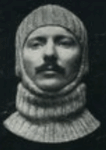
John Hume had a range of products specifically intended for parcels for servicemen, including many woollen items:
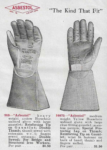
He also had a product range for workers at the huge new munitions factory under construction at nearby Gretna.
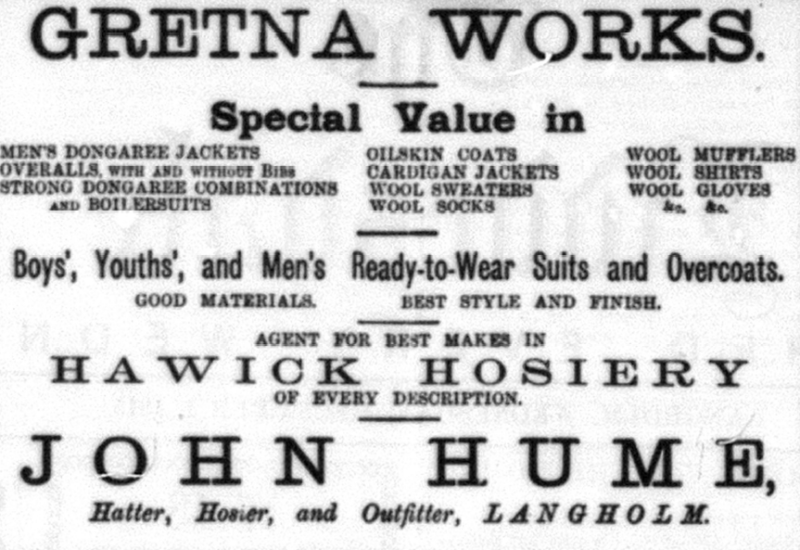
John mentioned in his initial advert that he had just sold his equivalent business in Hawick ‘for reasons of health’ (presumably his own), without addressing how his health permitted him to start a new venture in Langholm with such vigour (perhaps on a smaller scale).
The business seems to have started well as he advertised for an assistant in 1916 and again in 1917. He was still in Langholm in 1921 but is difficult to trace after that.
< Hairdresser … Ice cream >