Friday 1st January
Langholm hosted an annual New Year’s Day indoor carpet bowling tournament for the district. One of its teams beat 45 others, including participants from Lanarkshire, Dumfries, Annan and Carlisle.
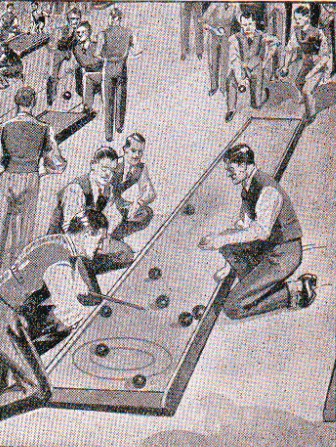
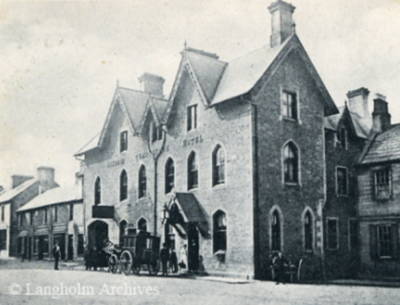
The competition involved nearly 13 hours of play in the hall of the Eskdale Temperance Hotel, Langholm, finishing at 10.30 pm.
Robert Ramage, a plumber and the president of Langholm’s Old Town lawn bowling club, handed out the prizes and made a speech. He appealed to all young men to consider their duty:
If you are the only son and support of your mother, your duty is at home. If not, then your King and country need you. It is the duty of everyone to do their utmost at the present time.
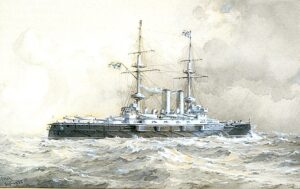
The year did not begin well for national defence, with the battleship HMS Formidable being torpedoed at 2 am in the English Channel. Only 199 out of 750 on board survived.
Wednesday 6th January
The local paper, the Eskdale & Liddesdale Advertiser (‘E&L’), provided its overview of 1914, including:
- The war. The local area has responded to the outbreak of hostilities by providing 378 men and women for military service so far. Two have been reported as dead, four wounded and three missing.
- Trade. The war resulted in cancellations of regular orders for the woollen mills but these were soon replaced by government orders for khaki.
- Municipal affairs. The main development was the establishment of a fire station on the High Street.
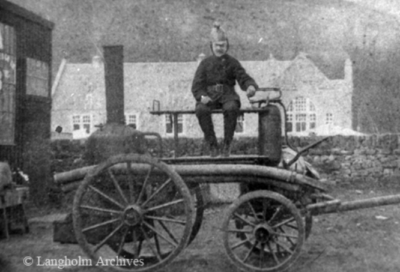
* The Esk was the second steam-powered fire engine to be commissioned in Scotland. It was in service in Langholm from 1871 to 1913.
Friday 8th January
The Church of Scotland’s Langholm Parish Church held its annual Sunday School treat, well attended by children, teachers, parents and others.
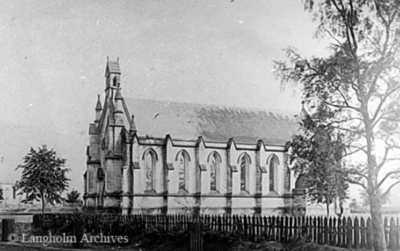
The event consisted of a tea, a musical programme and motion pictures, shown by one of the Milligan family using a cinematograph.
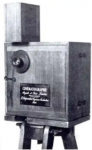
An early cinematograph
Wednesday 13th January
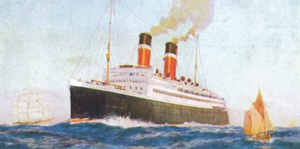
Walter Wilson, agent for several shipping lines, places weekly adverts in the E&L for berths on ships from Liverpool to various parts of the world. They include adverts for the Allan Line to Canada, highlighting ‘Palatial Accommodation’, ‘Unsurpassed Cuisine’ and ‘Matrons for Unaccompanied Young Women’.
Christopher Grieve (later known internationally as Hugh MacDiarmid) had three poems published in the E&L, under the heading ‘Local Lays’:
- Song in Exile.
- The Blue Hills of Eskdale: dedicated to T.S.C. (Rev Thomas Cairncross of the South United Free Church, his former mentor).
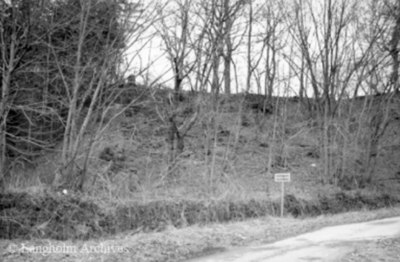
- The Curly Snake: dedicated to M.P. (Minnie Punton). Minnie is a schoolteacher with whom Grieve is romantically involved. The Curly Snake is allegorical, with the name being derived from a twisting track through a wood in Langholm.
Saturday 16th January
In the Langholm burgh police court, Senior Bailie (magistrate) John Cairns sentenced two men to five shillings or five days’ imprisonment for being drunk and disorderly in the High Street.
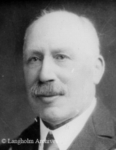
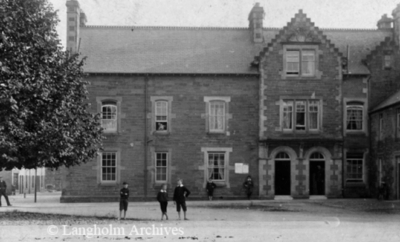
There are two cells in the local police station available for imprisonment.
Tuesday 19th January
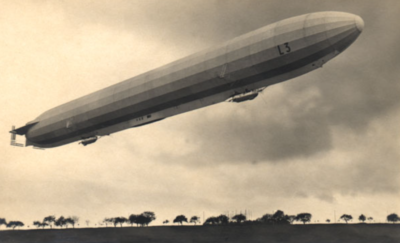
Zeppelin airships made their first raids on the UK, dropping bombs and incendiaries on Great Yarmouth, King’s Lynn and Sheringham, all in Norfolk, killing four civilians. Below is the German Imperial Navy airship that attacked Great Yarmouth.
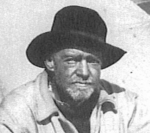
The ship Endurance became frozen in an ice floe in the Weddell Sea, 85 miles from Antarctica. It is part of an expedition to make the first land crossing of Antarctica, led by Ernest Shackleton. It set sail from Plymouth on 8th August 1914, three days after the UK’s declaration of war on Germany, after First Lord of the Admiralty Winston Churchill sent Shackleton a one-word telegram: ‘Proceed’.
Wednesday 20th January
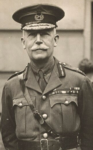
Lieutenant General Sir Spencer Ewart, head of Scottish Command (all Scottish army forces), has been appointed honorary colonel of the Queen’s Own Cameron Highlanders.
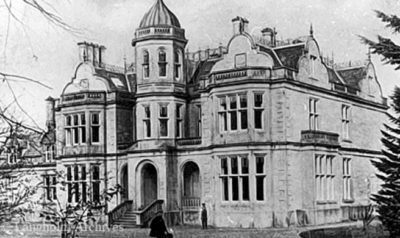
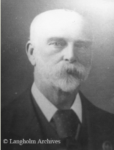
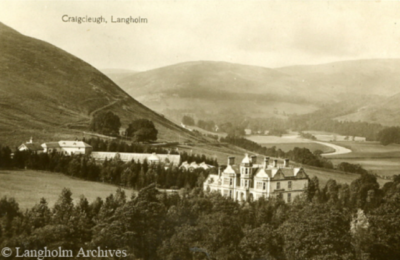
He lives at Craigcleuch, a large house two miles from Langholm with expansive views, built for woollen mill manufacturer Alexander Reid who died before it was completed.
Thursday 21st January
The Eskdale Unionist Association, previously known as the Eskdale Conservative Association, held an AGM in its clubrooms in the High Street, overseen by its president Arthur Bell, owner of Buccleuch woollen mill.
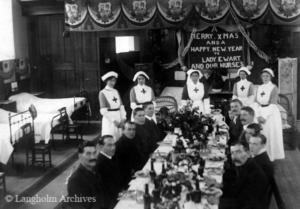
The association’s club facilities are being made available to wounded soldiers at Langholm’s Red Cross hospital. Below are soldiers and nurses at the hospital at Christmas 1914.
Friday 22nd January
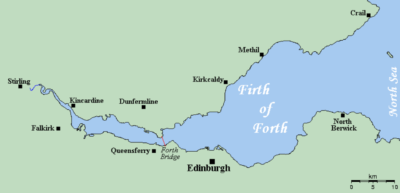
1/5th King’s Own Scottish Borderers (KOSB) is on guard duty in Fife, protecting the north side of the Firth of Forth. Its main activities at present are trench-digging, drills and parades.
Tuesday 26th January
A fire broke out in some outhouses at Sir Spencer Ewart‘s Craigcleuch property. Members of the fire brigade and police soon arrived but the fire was out of control and gutted the buildings, killing a Labrador. Craigcleuch house is below right of centre in the photo below; its outhouses are left of centre.
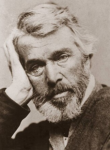
Isabella Armstrong, daughter of local farmer John Carlyle, died aged 45. She was a great-niece of the Victorian writer Thomas Carlyle who was born in Ecclefechan, Dumfriesshire, 15 miles from Langholm.
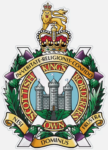
A lecture was given in the Eskdale Temperance Hall on ‘The Story of the KOSB’, organised by the Townhead Literary Society.
Wednesday 27th January
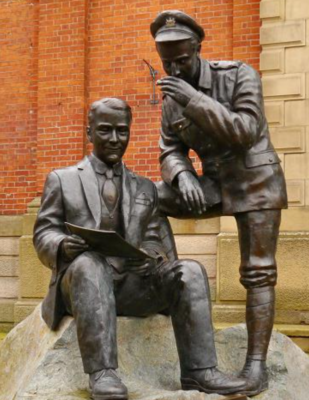
Before the war, the majority of mouth organs (harmonicas) were made in Germany. The E&L reports that the USA has increased production dramatically to help replace this supply. Mouth organs are suitably small to send in parcels to soldiers at the front. Below is a statue of Jack Judge, who wrote the popular song It’s a Long Way to Tipperary in 1912, with a soldier playing a mouth organ. The tune and lyrics have been adopted as a favourite marching song.
Saturday 30th January
The Langholm Carpet Bowling Club held its annual open tournament at the Douglas and Buccleuch Hotels, but play went on so long that a semi-final and the final have been deferred to next Saturday.