76 High Street
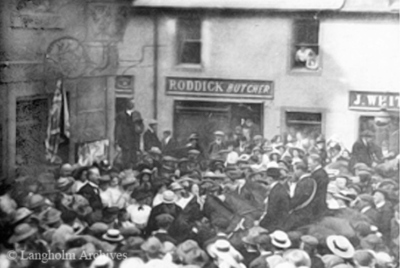
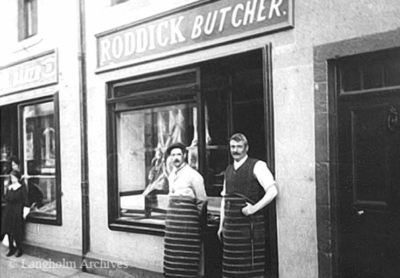
George Roddick (1867-1934) had a shop in Market Place, seen in the background below during the Common Riding in 1913.
Butchers were sometimes known as ‘fleshers’, particularly in Scotland. There were three in Langholm, who sometimes advertised together:
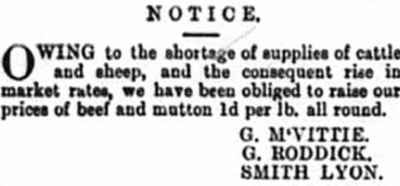
There were no formal qualifications needed to be a butcher, a trade learned by apprenticeship, often within families. Slaughter facilities needed to be licensed by the county council and the three butchers above each had one. The town council debated whether to establish its own slaughterhouse.
George’s facility was the location of a display in 1914 year by the Society of Prevention of Cruelty to Animals, using a bullet for slaughter instead of a knife, which was the main method at the time. The change was promoted by Sir William Younger of Auchen Castle, Moffat, Dumfriesshire, a former Liberal member of parliament.
The Army Service Corps had a butcher’s section, with reservists being trained in Aldershot for service at home and in the field.
Although some fresh provisions such as beef, mutton and rabbit were available on the front line, much of the meat supply was in cans, in particular corned beef, which is cured with ‘corns’ of rock salt, with herbs sometimes being added. It was also known as ‘bully beef’, probably from the French bouilli, meaning ‘boiled’. It was often served with bread or hard-tack biscuits, made from flour, water and salt (tack being old British navy slang for ‘food’).
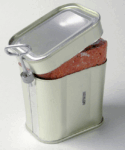
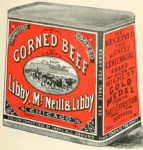
The corned beef cans were typically rectangular with tapered sides and a twist-key opener. One of the major suppliers was Libby, McNeill & Libby, founded in Chicago, Illinois, in 1869. See Grocer – Walter Glendinning for other types of canned foods.
Another major brand was Aberdeen-based Maconochie which made a tinned stew of beef, vegetables and gravy.
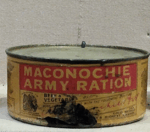
Three of George Roddick’s six sons were in military service:
- Charles (‘Chay’) (1890-1917): Lanarkshire Yeomanry. He had a golf handicap of nine.
- John (1892-1946): driver in the Army Service Corps, He may have gained his initial driving experience in his father’s car (below).
- Thomas (1894-1981): 1st/5th KOSB.
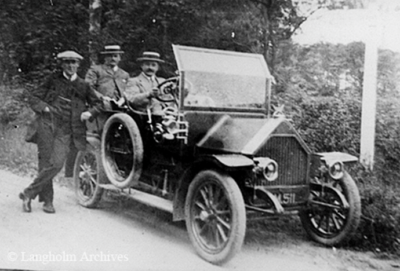
George had three different surnames over the course of his life. He was born George Roddick Kennedy in Ecclefechan in 1867 to Mary Kennedy, with an unidentified father. Mary married John McCracken in 1872, and for a while George was known as George McCracken. He then chose his middle name Roddick as a surname.
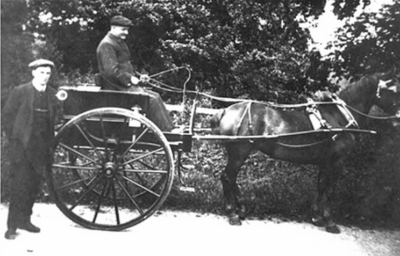
George’s eldest son Charles (‘Chay’) transferred to 9th Cameronians (Scottish Rifles) and was killed at Ypres on 20 Sep 1917, aged 26.