1. Road surfaces
There were three main types of road surface in the mid-1910s:
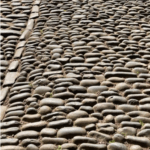
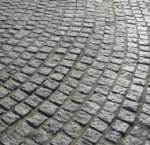
- Stone, either cobblestones (naturally-occurring rounded stones) or setts (quarried and shaped).
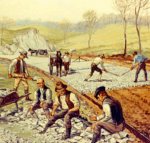
- Macadam, a mix of crushed stone and water, compacted by a horse-drawn, steam or fuel-propelled roller. The technique was developed by John McAdam (1756-1836) in the Bristol area from around 1820. McAdam was originally from Ayrshire, then Kircudbrightshire, and worked for his uncle in New York in the 1770s.
- Tarmacadam or ‘tarmac‘, which is macadam sealed with tar. It was invented in 1902 and patented in 1903 by Welsh inventor Edgar Hooley.
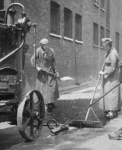
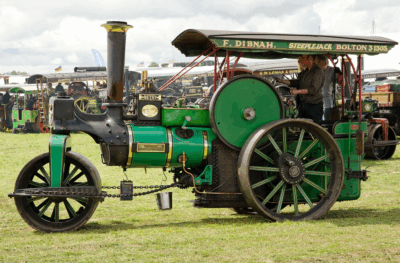
The steam roller was invented by Frenchman Louis Lemoine in 1859 and developed in the UK primarily by Aveling & Porter of Strood, Kent, the world’s largest road roller manufacturers in the early 1900s.
Eskdale’s Thomas Telford (1757-1834) was called the ‘Colossus of Roads’ by Robert Southey, later poet laureate. The many hundreds of miles of roads that he designed used new techniques to improve durability and speed of travel.
2. Town council roads
Roads were a significant issue for the town council in 1915, which had two roads-related committees:
- Roads and Bridges: the main focus was the cost of road improvements, under way across the town using macadam, not stone, to reduce the expense.
- Private Streets: the main items were:
- Unhygienic conditions of West Street and surrounds.
- The surfacing of Eskdaill Street at residents’ cost.
- Possible adoption of some private streets as council streets.
Robert Milligan, road inspector, reported the costs as following, prompting debate about whether it may have been better to use stone paving in the High Street, given its high cost per ‘Sup. Yd.’ (superficial or surface square yard):
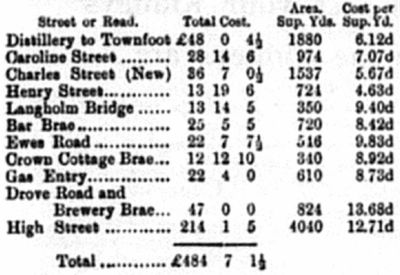
His report also included statistics of High Street users over the course of a week in June 1914: see 11th March in the Diary.
3. Parish council roads
…
4. District committee roads
The county roads weathered the 1914-1915 winter well. John Burnet, son of architect James Burnet, was the District Committee’s road surveyor and followed its instructions as to which roads to repair and which to leave until later.
One applicant was refused permission to put a gate over a road to control livestock and another’s request for a new road was declined.
5. Former toll roads