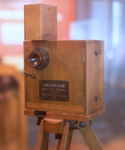
The first commercial motion picture projection was in 1895 by the aptly-named Lumière brothers (French for ‘light’), who invented the cinematograph.
By 1915, projectors were still typically hand-cranked but used electricity to generate light from arc lamps. Movies were silent, although were often shown with musical accompaniment. Motor-driven projectors became commonplace in the mid 1920s and sound in the late 1920s.
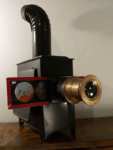
Projection of still pictures was still commonly done by limelight, a non-electric method using incandescent limestone, which could be used in a magic lantern. The pictures were captured on glass plates or celluloid.
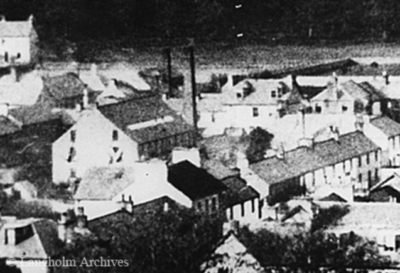
Langholm’s wartime cinema went by the name of Electric Pictures, run by brothers Thomas and Frank Milligan in the Buccleuch Hall.
Electric Pictures provided access to Hollywood entertainment as a distraction from the war, as well as newsreels and other features. The Milligan brothers had a band which could accompany silent movies.
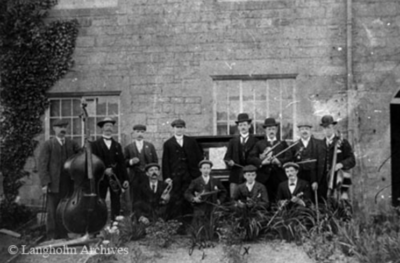
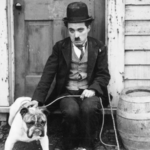
1915 was a stellar year for Charlie Chaplin who wrote, directed and acted in 13 silent movies, all but two of them featuring his character the Tramp. Some of the Milligan Band members above seem to be dressed as the Tramp.
The winter programme showed pictures on Monday, Wednesday, Thursday and Saturday nights.

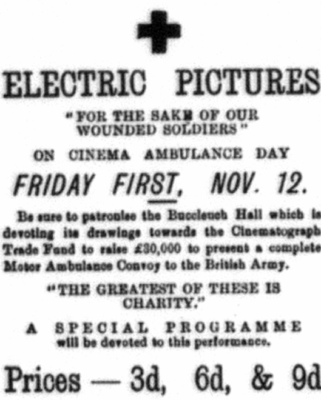
In November 1915, Electric Pictures participated in a nationwide fundraiser called Cinema Ambulance Day to provide an ambulance convoy for the Red Cross.