- Introduction
- Temperance organisations
- Licensing hours
- Government ownership
- No treating
- Local polls
- Minimum age
- Other controls
- Other countries
- Servicemen
- Legacy
1. Introduction
There was a strong temperance (anti-alcohol) movement in the UK in the late 1800s and early 1900s which grew during the war due to concerns about productivity being reduced by drunkenness.
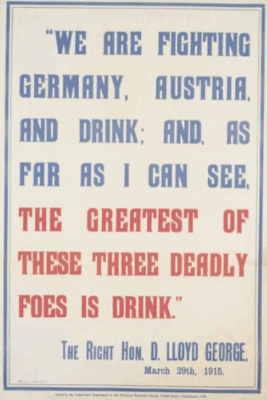
The Liberal government introduced various new controls, spearheaded by the chancellor of exchequer David Lloyd George.
Scotland had some additional regulations, including provision for local polls to reduce or eliminate alcohol licenses. Some of these remained for decades afterwards.
The main effects in Langholm were restrictions on licensing hours and the closure of two of its seven hotels in 1921.
2. Temperance organisations
Although ‘temperance’ initially meant moderation of alcohol consumption in the 1820s, it came to mean total abstinence, with movements gaining momentum over the next hundred years, particularly in the English-speaking world, the Nordic countries and Ireland.
In the UK, this was partly the reaction to increased drinking after alcohol became much cheaper with the reduction of duty and the lowered cost of production licences in the early to mid-1820s, in an effort to combat the illicit trade. The invention of the Coffey still in Ireland in 1930 resulted in significantly increased spirit production at lower cost.
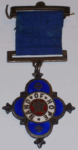
The most active temperance group in Langholm was the local branch of the International Order of Good Templars, which elected officers quarterly. One of its Chief Templars was Christopher Elliot, the Common Riding fair crier.
It met on Tuesday evenings in the Evangelical Union Congregational Church (the ‘EU Church’), whose leader Richard Smith promoted temperance, including chairing a demonstration by the Scottish Temperance League in Market Place (see 23rd August 1915 in the Diary).
Some of the other local church leaders were also temperance advocates, including the South UF Church minister James MacDonald, but this did not mean that their congregations were teetotal.
The Band of Hope was formed in 1847 in Leeds to teach children about abstinence. The EU Church had a group, as did the North UF Church, under minister Rev George Orr, although their activities declined during the war.
Another organisation was the Langholm branch of the British Women’s Temperance Association, headed by Mrs Winifred Biddulph, daughter of Rev David Maxwell of Broomholm.
Langholm also had the Eskdale Temperance Hotel, rebuilt from the King’s Arms Hotel in 1865-1867 by wealthy temperance enthusiast Colonel William Malcolm (1817-1907) of Burnfoot estate, near Langholm. It was sold in around 1887 to William Douglas (1855-1917), its innkeeper until his death, who retained its temperance stance and developed a supplemental revenue stream from local tours.
Dundee’s William McGonagall (1825-1902), sometimes described as ‘Scotland’s worst poet’, wrote some poems supporting temperance, including the following lines in The Demon Drink (1887):
If drink was abolished how many peaceful homes would there be,
Just, for instance in the beautiful town of Dundee;
Then this world would be heaven, whereas it’s a hell,
And the people would have more peace in it to dwell.
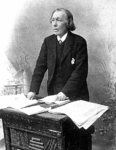
McGonagall would have been pleased to know that 35 years after writing the above lines, whisky and champagne enthusiast Winston Churchill lost his ‘safe’ Dundee parliamentary seat to prohibitionist Edwin Scrymgeour of the Scottish Prohibition Party. Churchill had been a Dundee Member of Parliament for 14 years and was defeated by the only MP ever to be elected on a prohibitionist manifesto.
3. Licensing hours
The Defence of the Realm Act 1914 restricted the sale of alcohol to lunchtimes and evenings across all of the UK, with specific hours varying by area. This applied for consumption both on and off the sales premises.
The sale of alcohol on Sundays was prohibited in Scotland from 1853 and pubs were closed on Sundays in Ireland from 1878 and in Wales from 1881. In England, Sunday hours were slightly more restricted than on other days.
An exception was made for bona fide travellers to be able to buy alcohol outside licensing hours. They had to have travelled at least three miles from their home for purposes other than purchasing a drink but in many cases this became a convenient loophole.
4. Government ownership
In 1915-1916, the government built a nine-mile long cordite manufacturing complex (‘HM Factory‘) and two new towns, Gretna and Eastriggs, 10 miles north-west of Carlisle, the factory workers’ main leisure destination.
Cordite was a propellant for artillery shells and bullets, much needed to help address the UK’s 1915 explosives shortage (the ‘Shell Crisis’: see 14th May in the Diary).
Author Arthur Conan Doyle, creator of Sherlock Holmes, visited the factory in late 1916 and described the mix of raw materials for cordite as ‘the devil’s porridge’.
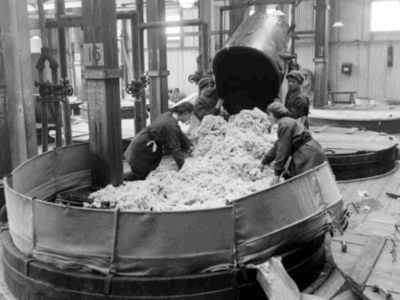
The government was highly concerned about the negative effects of alcohol on military performance, particularly productivity at munitions factories, and created the Central Control Board (Liquor Traffic) in May 1915, with sweeping powers.
The board instigated a State Management Scheme for alcohol production, distribution and sales in three areas: Carlisle, Cromarty Firth in Moray/Elginshire and Enfield in north London. Cromarty Firth was the location of an important naval base and Enfield was home to the Royal Small Arms Factory, whose products included the Lee Enfield rifle.
In the Carlisle area, the government closed numerous pubs and nationalised around 320 others, as well as taking over breweries and licensed premises. The designated area included Gretna and Annan over the Scottish border but did not extend to Langholm, 20 miles north of Carlisle.
Annan licence holders sent an objection to the board in late 1915 about the amount of compensation received. The Annan Town Council reviewed this in December 1915, with Provost Foster describing the compensation as ‘robbery’ (see 23rd December in the Diary).
5. No treating
The government implemented a ‘No Treating Order’ in 1915, requiring any drink ordered to be purchased by the consumer, with a possible six-month prison sentence for a breach, although the usual penalty was a fine for the proprietor and/or server.
The Press Association wrote on 11 October 1915 that the order spelled the doom of the scrounger on the lookout for free drinks from others.
The order was frequently subverted by people buying rounds by giving money to others to buy their own drinks.
6. Local polls
The Temperance Scotland Act 1913 allowed for a petition by a minimum of 10 percent of a burgh’s electorate to trigger a local poll, which could then lead to a zero, 25 or 100 percent reduction of licences for the sale of alcohol.
Delayed by the war, polls started in 1920. There were 1,200 licensing districts, in which 584 polls were triggered, with 41 districts voting for total prohibition and 35 for ‘limitation’ (25 percent reduction).
In 1922, Langholm was one of the relatively few districts to vote for limitation, which resulted in the closure of the Commercial Hotel and the Buccleuch Hotel.
There was no similar scheme in England, with the only dry towns being the Cadbury family’s model village of Bournville and a few government-specified areas near munitions factories (see above).
7. Minimum age
There was no national minimum age for the purchase of alcohol in the 1800s, with any restrictions being determined regionally or locally. In some areas, alcohol could be purchased legally by 12-year olds.
The minimum age was set at age 14 in both Scotland and England in 1901 (16 for spirits), with an exception for some off-licence sales.
8. Other controls
Various other wartime measures were introduced, including:
- Increased duties: duties on alcohol were increased over time during the war, with a bottle of whisky costing five times as much in 1918 as before the war.
- Reduction of beer strength: new regulations resulted in beer of an average of about three percent ABV, compared to about five percent before the war. The weakened beers were known as ‘government ales’.
- Railways: alcohol consumption was banned on trains.
- Intoxication laws: under the Temperance Scotland Act 1913, anyone entering a pub while intoxicated was liable to arrest.
- Minimum cask time: the Immature Spirits (Restriction) Act 1915 required spirits to be ‘warehoused’ for a minimum two years, extended to three years in 1916, resulting in a delay of some spirit supplies.
- Grain availability: diminishing grain supplies were allocated primarily for food consumption, causing many distilleries to close during the war. Langholm Distillery closed permanently in 1917.
9. Other countries
Some countries had some strict alcohol laws, cited as positive examples by many UK temperance organisations.
Russia stopped almost all vodka production and sales from August 1914, a decision made by Tsar Nicholas II whose government had a monopoly on the vodka trade.
France banned absinthe early in the war and reduced the maximum strength of spirits to 23 percent. It had similar restrictions to the UK regarding limited opening hours and no treating.
Germany did not introduce specific measures to moderate alcohol consumption, but reductions in grain supplies had a moderating effect.
The USA had nine ‘dry’ states in 1915 and 31 others had ‘local option’ laws, allowing individual counties to ban alcohol. This was primarily due to the temperance movement rather than the war, but in 1918 alcohol was restricted to 1.28 percent ABV to preserve grain.
The Ottoman Empire had a diverse population with alcohol being acceptable in more secular communities. As the war continued, alcohol consumption came to be seen as a waste of scarce resources. Religious and conservative influences resulted in prohibition in Turkey in late 1920.
10. Servicemen
For most countries’ servicemen, alcohol rations were a morale-booster and a shots of spirits were often used as a form of analgesic for the wounded.
The types of alcohol available varied by place of origin and theatre of war, but the predominant rations were schnapps and beer or wine for Germans, pinard (cheap red wine) and brandy for the French and rum for the British.
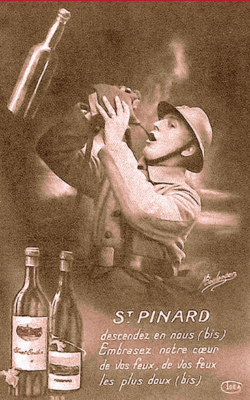
Russians did not have a regular ration but vodka was sometimes made available. Americans were usually prohibited from any alcohol consumption.
11. Legacy
The activities of temperance organisations diminished from the 1930s, particularly after the repeal of prohibition in the USA in 1933. Those that continued typically broadened their scope to cover drugs and other sources of potential dependency. The International Order of Good Templars is now part of Movendi International and the Band of Hope is now Hope UK.
Regarding licensing hours, Scottish hotels could serve alcohol to the public, not just bona fide travellers, from 1962. The pattern of afternoon pub closures continued until 1976 in Scotland and 1988 in England and Wales. Scottish pubs started opening on Sundays from 1977.
Government ownership under the State Management Scheme, including the ‘Carlisle experiment’, continued until 1971.
The ‘no treating‘ ban was repealed in June 1919.
Local polls in Scotland, voting on alcohol licence restrictions, were abolished in 1976. However, restrictions from previous votes could remain in place until overturned. Clarkston in East Renfrewshire stayed dry until 2006, perhaps the last poll area to revert.
The minimum age for drinking was raised to 18 nationally in 1923 after a private bill by Lady Nancy Astor, which remains to this day. An exception is for 16 and 17-year olds being able to drink beer, cider and wine if bought with a meal by an accompanying adult.
Other controls were relaxed over time, although the three-year minimum cask maturation for whisky remained and became a marketable aspect of product quality.
As in the UK, many other countries reduced their controls after the war but the USA introduced full prohibition in January 1920. It lasted until 1933, repealed because of public and commercial opposition, loss of jobs and government tax revenues, incentives for illegality, and difficulties with enforcement. Turkey repealed its prohibition partially in 1924 and fully in 1926 as part of its secularisation under President Atatürk. Some commentators, e.g. Mark Lawrence Schrad in Time magazine (1921), have attributed Russia‘s 1917 revolution significantly to its 1914 vodka ban due to revenue loss and agricultural disruption.
< Adverts … Property ownership >